

Dog Rescue Stories That Inspire: Real Second Chances
Table of Contents
- Why Dog Rescue Stories That Inspire Stick With Us
- From Shelter Dog to Family: What the First Weeks Look Like
- Preparing Your Home for a Rescue Dog Before Pickup Day
- How to Support Dog Rescue Organizations Beyond Adopting
- Real Dog Rescue Stories That Inspire: Three Journeys Worth Knowing
- The Science Behind the Human-Animal Bond
- Frequently Asked Questions
Last Updated: September 29, 2026
Why Dog Rescue Stories That Inspire Stick With Us
Dog rescue stories that inspire stay with us because they compress an entire life change into a few minutes of narrative. A dog that had nothing ends up with everything. We cry, we share the post, and then, if we're honest, most of us move on with our day.
Here's the part that bugs me. The story ends at the adoption photo, and that's exactly where the real work begins. This guide from HARRY PEACHES is about the part nobody posts: the first weeks, the setbacks, the slow trust-building, and the volunteers who make it possible. Below, we'll walk through what rescue actually looks like after the cameras leave, plus three real journeys worth knowing.
From Shelter Dog to Family: What the First Weeks Look Like
A rescue dog needs roughly three days to decompress, three weeks to settle into routine, and three months to feel fully at home. That timeline is the backbone of what most rescue organizations now hand new adopters.
Expect the first 72 hours to look nothing like the dog you met at the shelter. A dog that seemed calm in a kennel may pace, hide, or refuse food in a new house. That's not a red flag. It's a nervous system resetting.
The 3-3-3 Rule for Rescue Dogs Explained
The 3-3-3 rule for rescue dogs breaks adjustment into three phases, and knowing them prevents a lot of panic.
Phase |
Timeline |
What You'll Likely See |
What To Do |
|---|---|---|---|
Decompression |
First 3 days |
Hiding, appetite loss, shutdown |
Keep it quiet, skip visitors |
Settling in |
First 3 weeks |
Testing boundaries, real personality emerging |
Start a routine, begin light training |
Feeling at home |
First 3 months |
Relaxed body language, bonding, trust |
Build on training, expand the world |
The mistake most adopters make is treating week one like a homecoming party. Skip the parade of friends. Let the dog come to you.
Preparing Your Home for a Rescue Dog Before Pickup Day
Set up a single quiet space before the dog arrives, not the whole house. A crate or bed in a low-traffic room, water within reach, and a clear exit route give a nervous dog somewhere to retreat.
Room-by-Room Setup and Gear That Holds Up
- Entryway: A sturdy leash and a properly fitted collar or harness, plus a towel for muddy paws
- Living room: A washable bed, a chew toy, and a gate to block off rooms you're not ready to share
- Kitchen: Food and water bowls on a mat, treats stored out of reach, trash secured
- Bedroom: Decide now whether the dog sleeps with you or in their own space, and stick to it
- Yard: Check fence gaps and gate latches before the dog ever goes out
One thing nobody tells you: cheap gear fails at the worst moment. A collar that pops open on a nervous dog mid-walk is how dogs end up lost in the first week. If you want something that holds up, a velvet collar with a welded D ring and a quick-release buckle does the job, and it looks good enough for the adoption photo too. You can browse Dog Gear to find pieces built for exactly this stage.

How to Support Dog Rescue Organizations Beyond Adopting
Adopting is the prize, but rescue organizations run on the boring stuff: transport, vet bills, foster homes, and laundry. Not everyone can take in a dog, and that's fine. There's plenty of work left.
Here's what actually helps:
- Foster. Opening your home for a few weeks frees up kennel space and gives a dog real-world practice. Fostering is the single biggest bottleneck for most rescue groups.
- Transport. Driving a dog from a crowded shelter to a rescue with space saves lives without costing you a dime.
- Donate supplies. Food, blankets, crates, and cleaning products get used every single day. Ask what's actually needed before you buy.
- Volunteer at events. Adoption fairs need people to hold leashes and answer questions.
- Share adoptable dogs. A repost genuinely finds homes. It costs you nothing.
Real Dog Rescue Stories That Inspire: Three Journeys Worth Knowing
The rescue stories that stick are rarely the dramatic ones. They're the slow ones, where a dog that had every reason to shut down decides to trust a person instead. What separates a story you scroll past from one you remember is specificity: the timeline, the setbacks, and the small wins that don't make the adoption photo.
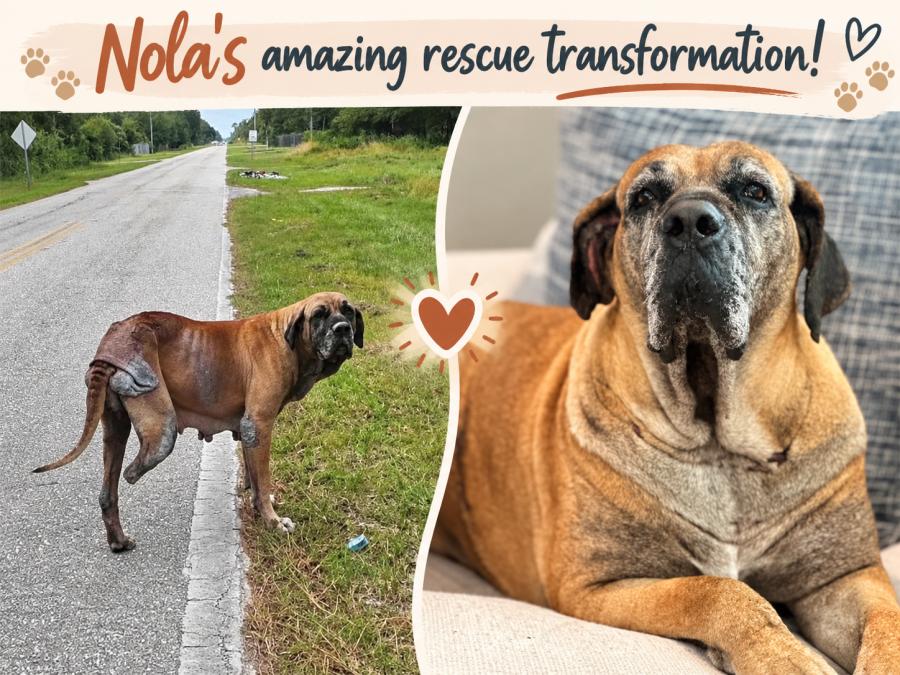
Harry Peaches very own rescue beauty: NOLA
The Senior Dog Nobody Wanted
Senior dogs sit in shelters far longer than puppies, and many never leave. A common pattern rescue groups describe is the 10-year-old dog surrendered when an owner moves into assisted care or passes away. That dog arrives house-trained, past the destructive phase, and often already knows basic cues. What they don't have is time on their side, which is exactly why they're overlooked.
The adjustment for a senior dog usually looks different from a puppy's. Instead of chewing and testing boundaries, you get long naps, stiff morning walks, and a dog that sleeps through the night from day one. The trade-off is medical: dental disease, arthritis, and thyroid issues are common in older dogs, so a realistic adopter budgets for a senior wellness exam in the first month and asks the shelter for any known history. The reward is a dog whose personality is fully formed. You know what you're getting, and what you're getting is usually calm, grateful, and already yours.
From Stray to Service Dog
Some strays carry exactly the temperament a service dog program needs: steady, food-motivated, unbothered by noise. Rescue organizations and service dog trainers increasingly work together to screen shelter dogs for that work, and the screening is more rigorous than most people assume. Candidates are evaluated for sound sensitivity, recovery time after a startle, willingness to work for a handler, and how they handle novel surfaces like grates and slick floors.
A dog that slept under a bridge can end up opening doors for a veteran.
The Science Behind the Human-Animal Bond
The human-animal bond is the measurable physiological connection between people and their pets, and it runs in both directions. Time with a dog lowers stress markers in people, and a stable home lowers them in the dog. That two-way effect is the part most rescue write-ups skip, and it's the part that explains why the bond feels different when the dog came from a shelter.
Frequently Asked Questions
What is the 3-3-3 rule for rescue dogs?
The 3-3-3 rule breaks the first stretch of adoption into three phases: three days of feeling overwhelmed and hiding, three weeks of settling into routine and testing boundaries, and three months of finally relaxing and trusting. It is a general timeline, not a strict schedule, so a shy dog may take longer and a confident one may move faster. Knowing the phases helps you adjust expectations during the early weeks of any dog rescue story you bring home.
Are rescue dogs harder to train than puppies?
Not automatically. Adult rescue dogs often arrive with some house manners and a longer attention span than a young puppy, while puppies need constant supervision and repetition. The real variable is history: a dog that missed socialization may need patient, reward-based work on leash skills and new people. Short daily sessions, high-value treats, and a predictable routine usually move things along faster than long training marathons.
How can I support dog rescue organizations if I cannot adopt right now?
Fostering is the highest-impact option because it frees a kennel spot and gives a dog real-world experience. If fostering is not possible, shelters need dog walkers, transport drivers, event help, and supply donations like bedding, treats, and cleaning goods. Monthly giving covers spay, neuter, and veterinary care, which are a rescue's largest recurring costs. Sharing adoptable dogs on your own social feeds also works, since many placements start with a friend of a friend.
What should I know before adopting a rescue dog?
Plan for a decompression period before you plan for training. Set up a quiet space with a crate or bed, keep the first week low-key, and introduce other pets slowly through scent and barrier meetings. Budget for a veterinary visit, flea and tick prevention, and a collar that fits, since a loose collar can slip during the adjustment phase. Ask the rescue what the dog's known triggers are, then build your routine around avoiding them at first.
Rescue is not a one-time decision. It's three months of patience, a house that's been dog-proofed, and a willingness to let a frightened animal set the pace. HARRY PEACHES exists for the people who take that on and then never stop talking about their dog. If that's you, our dog lover apparel and dog gear are made for the life you're actually living, not a polished version of it. Shop now and wear the message.


